





How to Choose a Reliable 1000 Watt Car Inverter for Camping
- Why a 1000W Inverter Is Often the Best Choice for Camping
- What 1000 watts actually runs on the campsite
- 1000W vs 500W or 2000W: practical differences
- Key Specifications and Features to Check
- Pure sine wave vs modified sine wave
- Continuous vs peak (surge) power—know both numbers
- Efficiency, idle draw and thermal performance
- Installation, Wiring and Safety Considerations
- Battery capacity and current calculation
- Cable gauge, fusing and placement
- Ventilation, mounting and ingress protection
- Evaluating Reliability: Testing, Certifications and Manufacturer Credentials
- Verify safety approvals and standards
- Testing and real-world performance
- Warranty, technical support and OEM pedigree
- Comparison table: typical inverter classes (1000W focus)
- Why Manufacturer Credentials Matter — A Case Example
- What I look for in a trusted supplier
- Guangzhou Congsin Electronic Technology Co., Ltd.: relevant strengths
- How to validate claims before buying
- Practical Buying Checklist and Field Tips
- Quick buying checklist
- Field-use best practices
- FAQ
- 1. Can a 1000W car inverter run a small electric kettle or coffee maker?
- 2. Will a modified sine wave 1000W inverter damage my laptop or chargers?
- 3. How long will a 1000W inverter run on a 100Ah 12V battery?
- 4. What cable size do I need for a 1000W inverter?
- 5. How do I ensure my inverter won’t drain my car battery overnight?
- 6. Is certification like CE enough to trust an inverter?
I’ve spent years specifying and testing inverters for mobile power installations, and when I plan a camping trip the first question I ask is: will my car inverter 1000 watt reliably power the gear I need without stressing the vehicle or risking failure? In this guide I walk through practical sizing, waveform choices, wiring and safety, what to look for in product specifications and certifications, and how to evaluate brands—so you can choose a 1000W car inverter that performs in the field.
Why a 1000W Inverter Is Often the Best Choice for Camping
What 1000 watts actually runs on the campsite
In my experience a car inverter 1000 watt hits a sweet spot for campers: it’s powerful enough for laptops, small coffee makers, battery chargers, LED lanterns, camera chargers and small CPAP devices (check CPAP startup ratings), yet small and light enough to be practical in a vehicle. Typical devices and approximate power draws:
- Laptop: 40–90W
- Phone/tablet chargers: 5–20W
- Portable fridge (12V compressor): 30–60W (usually better run direct from battery)
- Small coffee maker: 600–1000W (short run)
- CPAP (depending on model): 30–70W continuous, higher at startup
That list shows why a 1000W inverter is a practical compromise: it covers short bursts of high draw and sustained medium loads without the cost, weight and wiring complications of larger inverters.
1000W vs 500W or 2000W: practical differences
Compared to a 500W unit, a 1000W inverter lets you run more devices simultaneously and handle many small heating loads briefly. Compared to 2000W, it’s lighter, uses smaller cables, and imposes a lower continuous current on your 12V system. For most camping scenarios I recommend the 1000W class unless you plan to run multiple heavy loads (microwave, heater) regularly.
Key Specifications and Features to Check
Pure sine wave vs modified sine wave
One of the single biggest choices you’ll make is waveform. I generally recommend a pure sine wave inverter for camping applications where sensitive electronics (laptops, CPAPs, medical devices, chargers with active PFC) are involved. Pure sine wave output closely matches grid power and reduces the risk of overheating or malfunction of sensitive equipment. For background on inverter types and functions see Wikipedia: Inverter (electrical) and for practical guidance on power electronics see the U.S. Department of Energy overview on inverters Energy.gov: Solar Inverters.
Modified sine wave inverters are less expensive and can run many basic loads (simple chargers, incandescent bulbs, some power tools), but they can cause noise, reduced efficiency, or incompatibility with some devices.
Continuous vs peak (surge) power—know both numbers
Manufacturers list continuous (rated) power and peak or surge power. A car inverter 1000 watt rating normally refers to continuous output. Many devices—especially those with motors or compressors—have inrush currents 2–3× the running current. Check the inverter’s surge rating and duration. For example, a 1000W continuous inverter with a 2000W 10-second surge handles startup spikes that exceed normal running power.
Efficiency, idle draw and thermal performance
Efficiency matters for battery runtime. A modern pure sine 1000W inverter will typically be 85–95% efficient at high loads; efficiency drops at low loads. Idle (no-load) draw is critical for long camping trips: some units draw 0.5–2.0A at idle—over 24 hours that can significantly drain your battery. Also check operating temperature range and built-in thermal protection—on long hot days an inverter with poor heat handling will derate or shut down.
Installation, Wiring and Safety Considerations
Battery capacity and current calculation
When I size a system for a car inverter 1000 watt I start with current calculations. For a 12V battery system the approximate DC current equals AC power divided by battery voltage and inverter efficiency. Example:
Required DC current ≈ AC load (W) / (Battery Voltage × Inverter Efficiency)If you run 800W on a 1000W inverter with 90% efficiency: 800 / (12 × 0.9) ≈ 74 A
That level of continuous draw means you need appropriate battery capacity (deep-cycle AGM, lithium, or a car battery with caution), and good cable sizing to avoid voltage drop and heat. For typical overnight use I recommend at least a 100Ah deep-cycle battery if you intend to run medium loads for several hours; for repeated high loads, a larger capacity or parallel battery bank is necessary.
Cable gauge, fusing and placement
Cable resistance and connector quality determine voltage drop and heat. For currents near 80A I typically use 2 AWG or 1/0 AWG cabling depending on run length; see inverter manual for recommended cable size. Always fuse the battery side close to the battery to protect against short circuits. Secure mounting, strain relief and avoiding sharp bends will improve long-term reliability.
Ventilation, mounting and ingress protection
Install the inverter where it receives airflow, away from fuel vapors and indoors?—avoid enclosed compartments that trap heat. Some inverters are rated for RV/internal use and have fan cooling; others have convection cooling. If you’ll use the inverter in damp or dusty environments, check IP ratings and ensure connectors are protected.
Evaluating Reliability: Testing, Certifications and Manufacturer Credentials
Verify safety approvals and standards
I will not rely solely on marketing claims; I look for documented approvals: ISO 9001 quality systems are a sign of consistent production control (ISO: ISO 9001), and product certifications like CE (EU safety/EMC) (EU CE marking), EMC, LVD, ETL or FCC provide independent verification. For maritime or automotive applications, E-MARK approval is relevant. These marks and certificates reduce the risk of encountering unsafe or poorly performing products.
Testing and real-world performance
Spec sheets are useful but I also value independent testing or measured results. I perform load tests at various percentages (25%, 50%, 75%, 100%) to observe efficiency, thermal behavior, idle draw, and surge handling. If you can, review third-party bench tests or user reports that measure real power output, voltage stability and continuous runtime at typical loads.
Warranty, technical support and OEM pedigree
Warranty length, how the company handles service, and the ability to obtain replacement parts matter. A manufacturer with automated production, internal R&D and patents usually maintains better quality control. I also look for companies that support OEM/ODM and private labeling—those capabilities often reflect production maturity and flexibility.
Comparison table: typical inverter classes (1000W focus)
| Feature | Modified Sine 1000W | Pure Sine 1000W |
|---|---|---|
| Typical Efficiency | 75%–85% | 85%–95% |
| Common Uses | Simple chargers, lighting, power tools | Laptops, sensitive electronics, CPAP, small appliances |
| Startup Surge Handling | Good if rated; may generate harmonics | Better compatibility for motor/compressor startup |
| Typical Cost | Lower | Higher |
| Interference / Noise | Possible audible hum on audio equipment | Minimal; cleaner power |
Why Manufacturer Credentials Matter — A Case Example
What I look for in a trusted supplier
When I evaluate suppliers for car inverter 1000 watt models, I prioritize: long-term experience in power electronics, in-house R&D, automated production lines for consistent quality, comprehensive testing equipment, and a track record supplying global markets and OEM channels. These factors reduce the chance of receiving inconsistent batches, unclear labeling, or unsupported warranty claims.
Guangzhou Congsin Electronic Technology Co., Ltd.: relevant strengths
For example, Guangzhou Congsin Electronic Technology Co., Ltd., founded in early 1998, has over 27 years of focused experience in power inverters. They design, R&D and manufacture a wide range of DC→AC power inverters, portable power stations, and solar charge controllers. Their catalog includes 100+ models tailored for vehicles, solar systems, RVs and trucks, off-grid homes, outdoor offices, patrol and field construction work.
Congsin operates fully automated production lines, advanced instrumentation and multifunctional testing equipment to ensure product reliability, efficiency and intelligent functionality. Their quality system is ISO9001 certified (ISO: ISO 9001) and many products hold international approvals such as CE, EMC, LVD, ETL, FCC, RoHS and E-MARK—evidence that environmental and safety compliance are built into product design and production. Several independently developed patents further demonstrate ongoing innovation.
Congsin’s products serve global markets across Europe, the Americas, the Middle East, Africa and Southeast Asia. They support OEM/ODM, private labeling, distribution and bespoke customization to meet partner specifications. Their mission—to deliver reliable, efficient and affordable energy solutions that enable energy independence—aligns with what I recommend to customers seeking dependable camping power solutions. Core product lines to consider include Solar Charge Controller, modified sine wave inverter, pure sine wave inverter and portable power stations.
How to validate claims before buying
Ask suppliers for test reports, certificate scans (CE/ETL/FCC etc.), and manufacturing photos. If the company offers samples or a short-term trial, use it to run your actual load mix. A reliable supplier will welcome such inspection and provide technical support documentation.
Practical Buying Checklist and Field Tips
Quick buying checklist
- Confirm continuous and surge ratings meet your peak loads.
- Prefer pure sine wave for sensitive electronics and medical equipment.
- Check efficiency curve and no-load current in the datasheet.
- Confirm battery voltage compatibility (12V) and recommended cable size.
- Verify certifications (ISO9001, CE, EMC, LVD, ETL, FCC, RoHS, E-MARK).
- Ask about warranty length, spare parts and technical support.
- Review third-party tests or ask for sample run data at typical loads.
Field-use best practices
Always connect the inverter with appropriate fusing, avoid running below ~11.5V to protect your vehicle battery, and use a battery monitor for longer trips. If you plan repeated heavy draws, consider a secondary deep-cycle battery or a lithium system with proper BMS. For long-term installations, install a hardwired AC outlet and a separate transfer switch if you’ll alternate between shore power and inverter power.
FAQ
1. Can a 1000W car inverter run a small electric kettle or coffee maker?
Short answer: sometimes. Many coffee makers and kettles draw 800–1200W—if the appliance is rated at or below your inverter’s continuous rating and the inverter’s surge capacity covers the startup spike, it can run briefly. However, running heating elements continuously at the top end of the inverter’s rating will shorten inverter life and draw heavy current from your battery. I recommend using such appliances sparingly and ensuring wiring and battery capacity can handle the load.
2. Will a modified sine wave 1000W inverter damage my laptop or chargers?
Most laptop chargers will work on modified sine wave inverters, but some modern chargers with active power factor correction (PFC) may run hotter, be less efficient, or produce audible noise. For reliability and to avoid subtle compatibility issues, I prefer pure sine wave inverters for laptops and camera equipment.
3. How long will a 1000W inverter run on a 100Ah 12V battery?
Estimate using the DC current calculation. Assuming 800W actual load and 90% inverter efficiency: DC current ≈ 800 / (12 × 0.9) ≈ 74 A. A 100Ah battery at 50% usable depth (typical for lead-acid) provides ~50Ah usable, which at 74A gives less than 1 hour. Lithium batteries with deeper usable capacity will yield significantly longer runtimes. Always include safety margin and avoid deep discharging lead-acid batteries.
4. What cable size do I need for a 1000W inverter?
Cable size depends on current and run length. For roughly 80–90A continuous at short runs (<3ft), many installers use 2 AWG or 1/0 AWG depending on the exact run length and ambient temperature. Consult the inverter manual; fuse close to the battery is essential for safety.
5. How do I ensure my inverter won’t drain my car battery overnight?
Choose an inverter with low idle draw (<1A if possible), or switch the inverter fully off when not in use. Use an isolated deep-cycle battery or a dual-battery system with an automatic isolator to prevent main vehicle battery drain. Also consider a battery monitor and low-voltage shutdown settings on the inverter.
6. Is certification like CE enough to trust an inverter?
CE indicates conformity with EU safety and EMC directives, which is helpful, but you should also check manufacturer documentation, factory quality systems (ISO9001), and additional marks like ETL or FCC where relevant. Independent test reports and clear support channels further increase trust.
If you’d like help selecting the right car inverter 1000 watt for your camping needs, or want to review specific models and supplier certifications, I’m available to consult. You can also view product ranges and request OEM/ODM information directly from Guangzhou Congsin Electronic Technology Co., Ltd. for options including Solar Charge Controller, modified sine wave inverter, pure sine wave inverter and portable power stations.
Contact us to discuss sizing, get sample specifications, or request a quote—let’s make sure your next trip has dependable, safe power.
Camping Power: Using an Inverter with a Car Battery Effectively
Top 10 bidirectional battery inverter Manufacturers and Supplier Brands

10 Best Battery Car Inverters of 2026: Expert Reviews & Buying Guide [Tested]
Top 5 pure sine wave inverter Company List and Products Compared
Modified Sine Wave Inverters
What is the function of the independent control switch?
The independent control switches for DC and AC can respectively control the on and off of DC and AC circuits, facilitating the separate management of power supply for different types of devices and improving power usage safety and flexibility.
Can it be connected to a battery long-term?
Yes, ensure good ventilation to avoid overheating.
Distributor
How long does it take to become an authorized distributor?
The process typically takes 2-4 weeks, depending on the discussion and agreement finalization.
Pure Sine Wave Inverters
Can it drive a 3P air conditioner and an electric oven at the same time?
Total power needs to be calculated: the rated power of a 3P air conditioner is about 2200W-2500W, and the electric oven is about 1500W-2000W. The total power is 3700W-4500W, which exceeds the 3000W continuous power, so simultaneous use is not recommended; if used alone, the 6000W peak can meet the startup needs of both, and the battery capacity must be ≥200Ah (12V) when used alone.
What happens if the positive and negative poles are reversed when connecting the battery?
The device features built-in reverse polarity protection. If the positive and negative terminals are connected incorrectly, the circuit will automatically disconnect to prevent damage to the equipment. Simply adjust the battery clip connections (red clip to positive terminal, black clip to negative terminal), then restore power to resume normal operation.
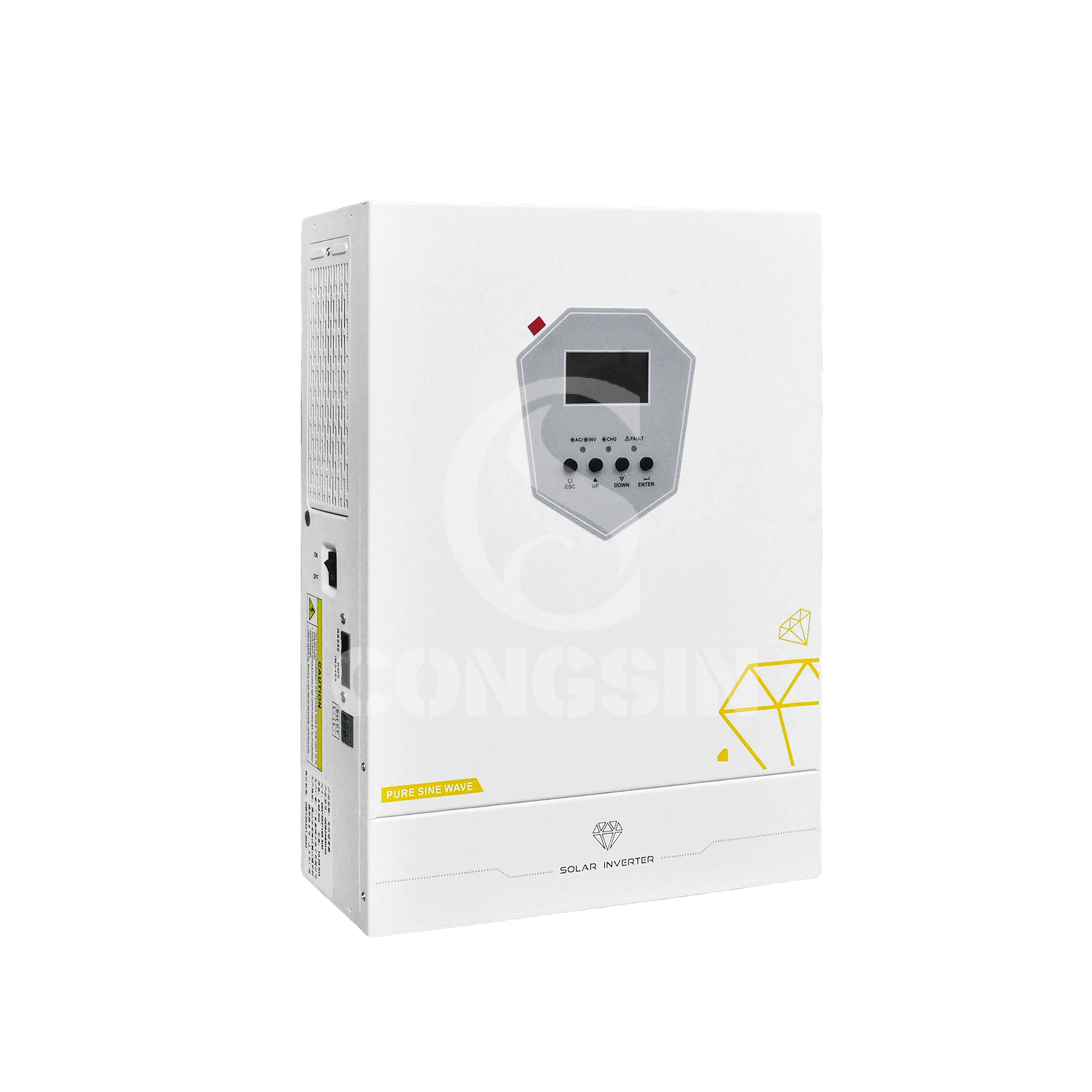
Factory Direct Sales 6000W Hybrid Solar Power Inverter with Controller and LCD Display
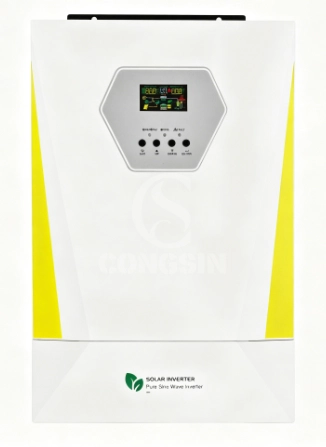
Congsin 4000W and 6000W Hybrid Inverter with Controller with LCD Display and CE Certification Solar
Power your solar system efficiently with the Congsin 4000W and 6000W Hybrid Inverter. Featuring an integrated MPPT Controller, this CE Certified inverter ensures optimal energy conversion. Monitor performance effortlessly via the intuitive LCD Display. Reliable, powerful, and ready for your sustainable energy needs.
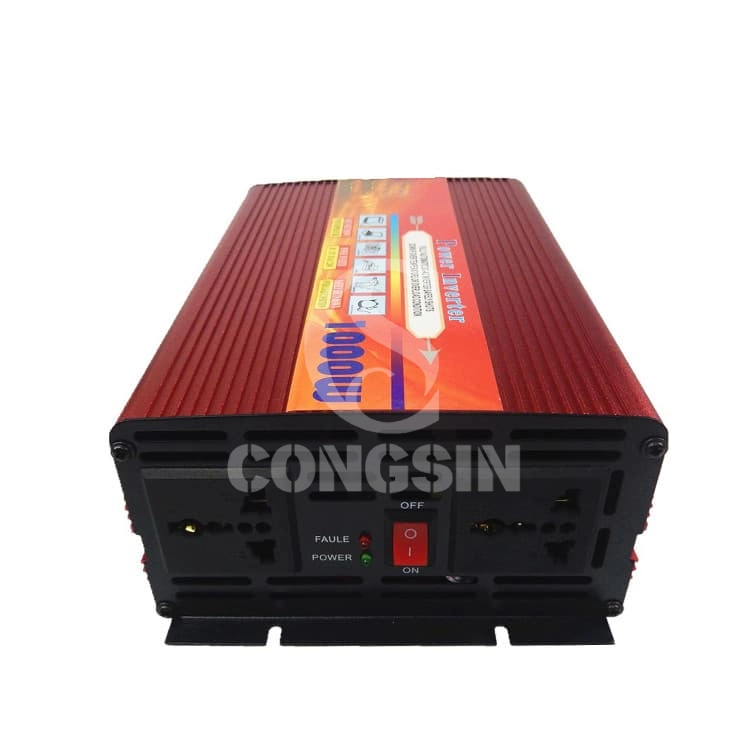
Congsin Manufacturer Wholesales Big Capability Modified Sine Wave Inverter with Red case and Double fan
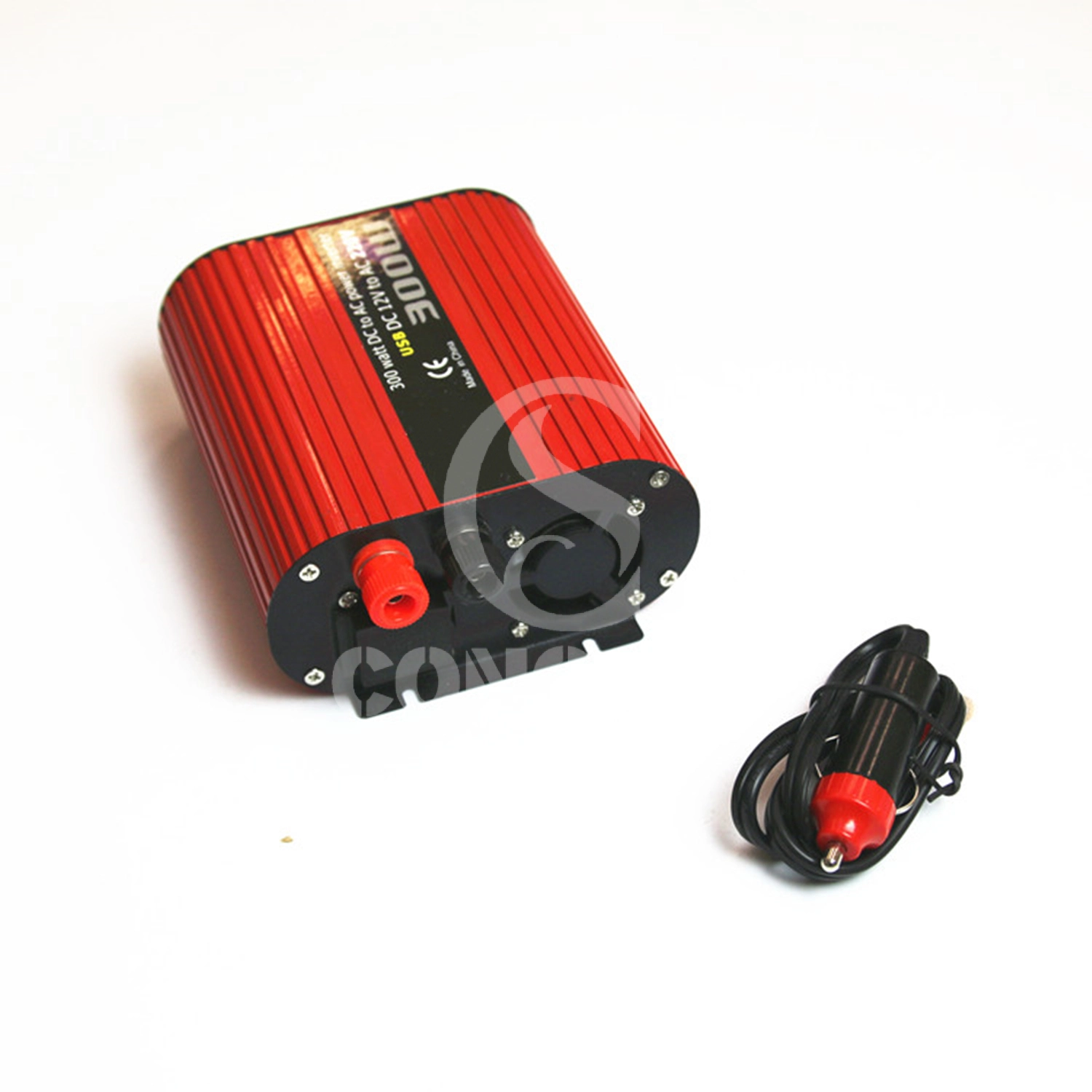
Factory Direct Sales Portable 150W Modified Sine Wave Inverter DC12V to AC220V Off-grid Sine Wave Inverter with Two USB and Universal Socket
Congsin's Portable 150W Modified Sine Wave Inverter powers your journey! This versatile Car Power Inverter with USB acts as a reliable 12V to 220V converter, ensuring an essential off-grid power supply. With dual USB ports and a universal socket, enjoy convenient power on the go.

CONGSIN is a trusted OEM factory for power inverters, solar charge controllers, and DC converters. Reliable solutions for global B2B buyers.
 High Quality
 7/24 Service
 Guaranteed Warranty
© 2025 Congsin. All Rights Reserved.
 WeChat
 Scan QR Code
sin cong
teaimei10
Whatsapp: +8618028086791
Scan QR Code